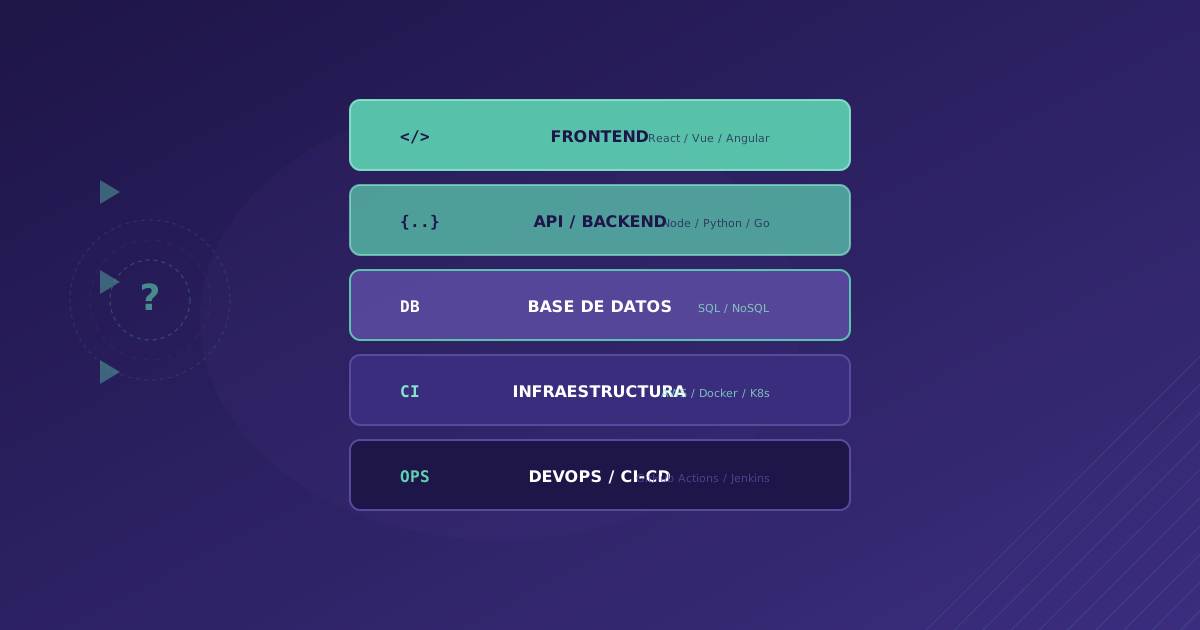
Choosing the right tech stack is one of the most important decisions when starting a project. A bad choice can lead to scalability problems, elevated costs, and maintenance difficulties.
Factors to Consider
1. Project Requirements
Before thinking about technologies, you need to deeply understand what you are building:
- Application type: Is it a static website, a SPA, a mobile app?
- Expected scale: How many simultaneous users do you expect?
- Critical features: Do you need real-time, data processing, third-party integration?
2. Available Resources
Your current team significantly influences the decision:
Key question: What technologies does your team master?

Learning a new technology = Time + Learning curve + Risk

Sometimes it's better to use something familiar and proven than the newest thing.
3. Ecosystem and Community
A technology with an active community offers:
- More libraries and tools
- Better documentation
- Easier to find developers
- Faster support for problems
Recommended Stacks by Project Type
Corporate Website / Marketing
- Astro / Next.js
- Tailwind CSS
- Sanity / Contentful (CMS)
- Vercel / Netlify (hosting)
E-commerce
- Next.js / Remix
- Shopify Hydrogen / Medusa
- PostgreSQL
- Stripe
- Cloudflare / AWS
SaaS Application
- Next.js / Remix
- Prisma + PostgreSQL
- Redis for caching
- Auth0 / Clerk
- AWS / GCP
Mobile Application
- React Native / Flutter
- Node.js or Go (backend)
- PostgreSQL / MongoDB
- Firebase (auth, push, analytics)
Common Mistakes to Avoid
1. Over-engineering
Don’t use microservices for an MVP. Start simple and scale when necessary.
2. Blindly following trends
Just because a technology is popular doesn’t mean it’s right for your case.
3. Ignoring maintenance
Consider the cost of maintaining the code long-term, not just the initial development.
4. Not considering security
Security is not an add-on; it must be in the design from the start.
Our Methodology at Soamee
In every project, we follow a structured process:
- Discovery: We understand the business and technical requirements
- Analysis: We evaluate technological options
- Proposal: We present the recommended stack with justification
- Validation: Quick prototype to validate decisions
- Development: Implementation with validated architecture
Conclusion
There is no “best” universal stack. The right choice depends on your specific context: requirements, team, budget, and timeline.
Need help defining the stack for your next project? Schedule a free consultation and we’ll help you make the best decision.