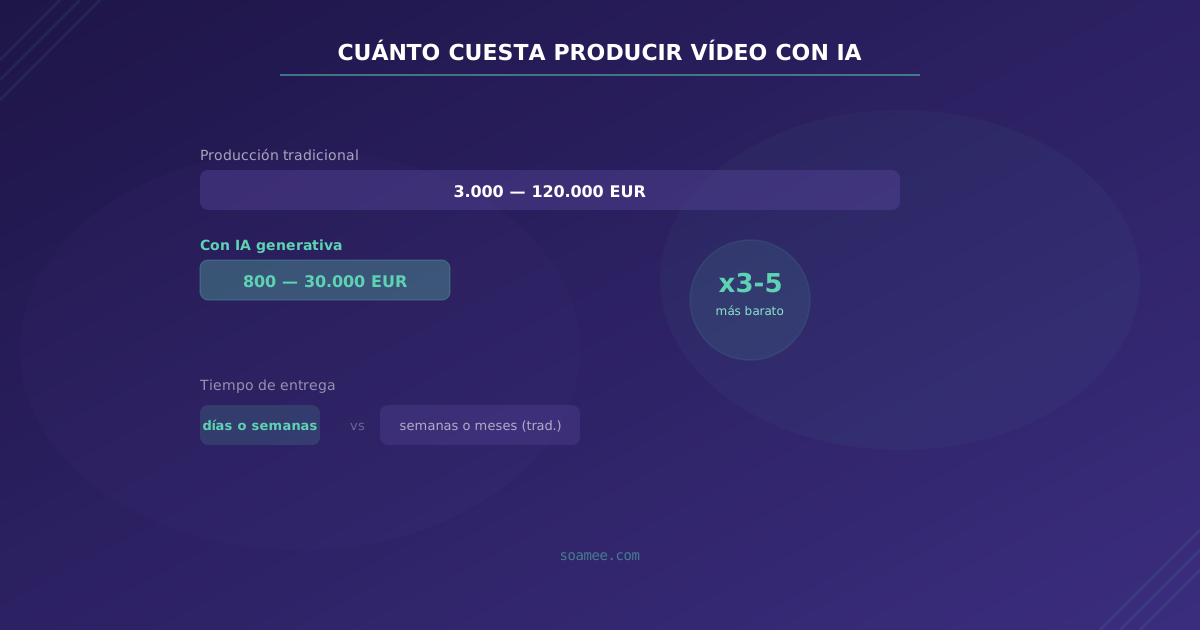
Producing video with AI is no longer an experiment for daring brands: in 2026 it is a real option for companies that need more audiovisual pieces, in more formats and languages, without multiplying the budget every time they launch a campaign.
The important question is not whether AI “makes cheap videos”. The right question is: how much does it cost to produce AI video with enough quality for a business, and how much of the budget goes to strategy, scriptwriting, creative direction, editing, voice, localization and iterations.
In this guide we lay out indicative ranges for four types of piece — short ad, product video, training avatar and full campaign — and compare them with an equivalent traditional production.
Quick summary: price ranges by type of piece
These ranges are indicative for B2B projects and brands with professional standards. A video generated without creative direction can cost much less; a project with a cinematic script, advanced motion and many versions can exceed these figures.
| Type of piece | Typical deliverable | Price with AI | Equivalent traditional production |
|---|---|---|---|
| Short ad | 10-30 seconds for paid social, landing page or launch | €800-3,000 | €3,000-12,000 |
| Product video | 45-90 seconds with demo, benefits and CTA | €1,500-6,000 | €6,000-25,000 |
| Training avatar | 3-10 minutes with AI presenter, voice and subtitles | €700-4,000 | €2,500-15,000 |
| Full campaign | 6-20 pieces, per-channel adaptations and languages | €6,000-30,000 | €25,000-120,000 |
The difference does not come only from “using an AI tool”. It comes from eliminating or reducing line items such as localization, casting, filming, travel, equipment rental, studio, permits and part of post-production.
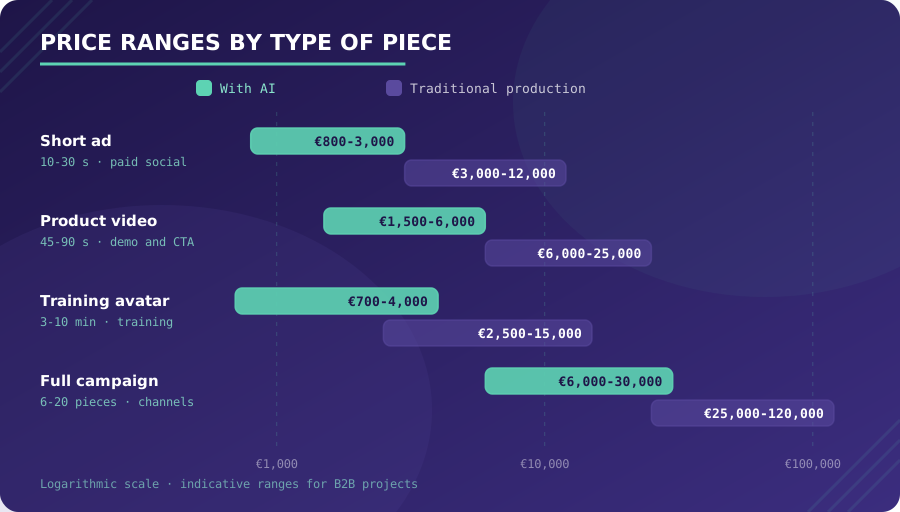
The same ranges on a logarithmic scale: AI does not shave the price, it moves it down a bracket.
What an AI video project normally includes
A professional budget should not be limited to “generating clips”. A serious project usually involves these phases:
- Brief and business objective: what the video needs to achieve, who it is for and where it will be published.
- Creative concept: idea, tone, visual references, narrative structure and opening hook.
- Script and storyboard: text, scenes, pacing, CTA and variants per format.
- Image or video generation: clips, avatars, backgrounds, product scenes or visual assets.
- Voice and sound: human or synthetic voiceover, music, effects, mixing and rights.
- Editing and post-production: cutting, captions, motion graphics, color, subtitles and exports.
- Iterations: review rounds, brand adjustments, copy changes and adaptations.
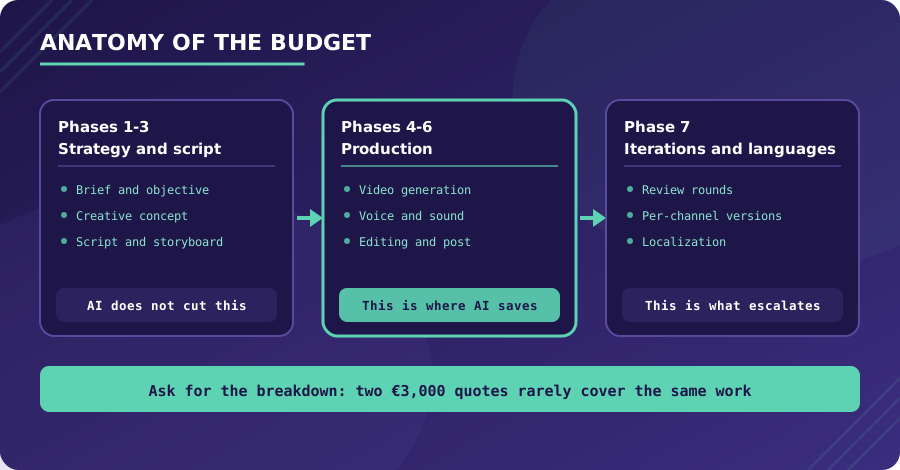
Where the budget goes: AI cuts production, not strategy and not adaptations.
When comparing vendors, always ask for the breakdown. Two €3,000 quotes can be radically different if one includes script, creative direction and two rounds of changes, and the other only covers generation and basic editing.
Ranges by type of piece
1. Short ad: €800-3,000
A short AI ad usually lasts between 10 and 30 seconds and is designed to capture attention fast: LinkedIn Ads, Meta Ads, YouTube Shorts, TikTok, landing pages or launch campaigns.
The price goes up when you need several hook versions, vertical/horizontal/square formats, claims per segment or adaptation to different countries. A simple ad with generative visuals, synthetic voice and light editing can be close to €800-1,200. A piece with a creative concept, motion, several versions and art direction can approach €2,500-3,000.
2. Product video: €1,500-6,000
Here the goal is to explain what the product does, why it matters and what the user should do next. It usually includes interface captures, generated scenes, animations, captions, benefits and a CTA.
In B2B software, SaaS or ecommerce, AI helps produce visual assets and versions without organizing a full shoot. Even so, the critical part is the script: if the message is not clear, the video will look pretty but will not sell.
A simple product video can sit at €1,500-2,500. If it requires a recorded demo, custom animations, a more elaborate narrative, premium editing and per-channel adaptations, the realistic range moves between €3,500 and €6,000.
3. Training avatar: €700-4,000
AI avatars are especially useful for internal training, onboarding, compliance, tutorials, support and multilingual content. They let you update content without re-recording a person every time a process changes.
A short module with a client-provided script, standard avatar, synthetic voice and subtitles can cost €700-1,500. A package with a didactic script, slide design, editing, translations, quizzes or several country versions can rise to €2,500-4,000 per module.
The advantage is not only in the first video: it is in updating. Changing a sentence, a screen or a regulation is usually much cheaper than reopening a traditional production.
4. Full campaign: €6,000-30,000
A full campaign is not one video: it is a system of pieces. It can include a hero video, short ads, versions per audience, vertical videos, remarketing creatives, product pieces, explainer avatars and per-language adaptations.
The range depends on the number of pieces, the creative depth and the number of versions. A light campaign with 6-8 deliverables can sit at €6,000-10,000. A multichannel campaign with 15-20 pieces, localization, advanced motion, hook testing and a content calendar can move between €15,000 and €30,000.
Comparison against traditional production
Traditional production still makes sense when you need real actors, specific locations, a physical product on camera, cinematic direction or an aesthetic impossible to simulate reliably. AI does not replace every shoot.
But for many corporate needs — digital ads, explainer videos, training, demos, social content, performance creatives — the difference in cost and speed is considerable.
| Line item | AI video | Traditional production |
|---|---|---|
| Pre-production | Brief, script, storyboard and visual references | The same, plus shoot planning |
| Filming | Reduced or nonexistent | Crew, location, actors, permits and equipment |
| Visual production | Generation, editing and compositing | Recording, lighting, direction and takes |
| Changes | Cheaper if they affect voice, texts or generated scenes | Expensive if they require re-shooting |
| Languages | Scalable with synthetic voice, subtitles and lipsync | New voiceovers, versions and sometimes a new shoot |
| Typical timeline | Days or a few weeks | Weeks or months |
| Total cost | Lower for digital, scalable pieces | Higher, but with more physical control and realism |
The practical rule: if the main value is in the message, the pacing and the channel adaptation, AI usually wins. If the main value is in a human performance, a real location or a physical product filmed in detail, traditional production can be the better investment.
What makes an AI video project more expensive
Script
The script is the difference between “a video that gets understood” and “a sequence of pretty images”. The more strategic the message — complex B2B, technical product, brand narrative, sales objections — the more work it requires.
Creative direction
Defining visual style, references, tone, pacing, composition and brand consistency prevents the result from looking generic. Creative direction makes the project more expensive, but it is also what keeps it from looking like a template.
Editing and motion graphics
AI can generate assets, but the edit is still key: pacing, transitions, captions, screenshots, animations, music, mixing and exports. The cost rises with custom motion or many adaptations.
Voice, music and sonic identity
A standard synthetic voice is cheap. A human voiceover, a cloned AI voice with permissions, professional mixing, licensed music or custom sound design increase the budget.
Languages and localization
Translating is not enough. You have to adapt messages, formats, references, units, brand pronunciation, subtitles and calls to action. Localization multiplies versions and reviews.
Iterations
Rounds of changes are normal, but they should be bounded. Changing a text does not cost the same as redoing the concept, the structure or the visual style. Define how many revisions the budget includes.
Rights, compliance and brand usage
In regulated sectors or large brands there may be legal review, claim approval, music rights, privacy, consent for voices or avatars and commercial use restrictions.
Indicative budget table
| Budget | Who it fits | What it usually includes | What it usually does not include |
|---|---|---|---|
| €800-1,500 | Quick test or one-off piece | Simple script, 1 short piece, synthetic voice, basic editing, 1 format | Strategy, several versions, advanced motion, languages |
| €1,500-4,000 | SME or marketing team with a specific goal | Concept, script, 1-3 pieces, careful editing, subtitles, 1-2 rounds | Full multichannel campaign, deep research, many adaptations |
| €4,000-10,000 | Product launch or scoped campaign | Main video, derived ads, several formats, creative direction, voice, light motion | Broad international production, many audiences, traditional shoot |
| €10,000-30,000 | Multichannel campaign or scalable content | System of pieces, per-channel versions, languages, avatars, premium editing, deliverables calendar | Complex shoots, celebrities, cinematic production |
| €30,000+ | Large brand or hybrid campaign | AI + shoot, advanced art direction, legal/compliance, extensive localization | Depends on scope: here custom production sets the rules |
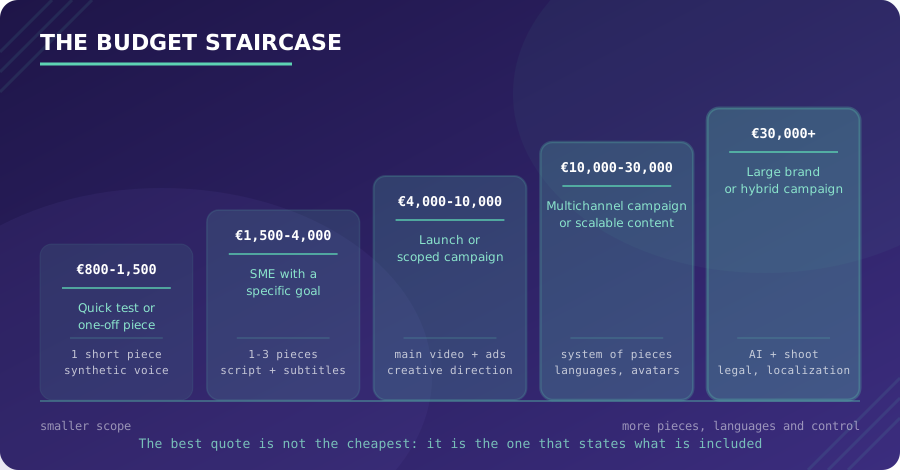
Each step adds scope: more pieces, more formats, more languages and more control — not “more video”.
Examples by sector
B2B SaaS
A SaaS company can create a 60-second product video for the homepage, three short LinkedIn ads and versions per industry. Usual range: €4,000-9,000 if it includes script, screenshots, motion and adaptations.
Ecommerce
An online store can produce performance pieces for different categories: benefits, offers, comparisons and synthetic UGC. Usual range: €2,000-8,000 per month for a recurring volume of creatives.
Training and human resources
A company with internal onboarding can turn processes into modules with an avatar, subtitles and country versions. Usual range: €1,000-4,000 per module, with significant savings on future updates.
Industry and manufacturing
A manufacturer can explain processes, safety or maintenance without sending cameras to the plant for every piece of content. Usual range: €3,000-12,000 depending on technical complexity, precision requirements and internal review.
Health, legal and finance
Here the cost rises due to compliance: claims, legal review, terminological precision and risk control. Usual range: €4,000-15,000 for explainer or training pieces with several validation rounds.
Education and online courses
AI can transform syllabuses into videos with an avatar, slides, voice and subtitles. Usual range: €700-3,000 per lesson or short package, depending on whether the script already exists or the content has to be designed from scratch.
How to request comparable quotes
To avoid proposals that are impossible to compare, prepare this minimum brief:
- Objective of the video: awareness, acquisition, conversion, training, support or sales.
- Target audience and main channel: web, LinkedIn, YouTube, TikTok, email, LMS or event.
- Approximate duration and number of pieces.
- Languages and countries.
- Available material: branding, screenshots, product, script, claims, references.
- Expected level of finish: quick test, corporate piece or premium campaign.
- Number of revision rounds needed.
- Deadline and internal approvers.
With that context, an agency can give you a useful range and explain what would push it up or down.
Conclusion: AI makes production cheaper, not strategy
In 2026, producing AI video for a business can cost from under €1,000 for a short piece to tens of thousands for a multichannel campaign. AI reduces production costs, speeds up versions and makes it viable to create more audiovisual content, but it does not eliminate the strategic work.
The best budget is not the cheapest one: it is the one that clearly separates concept, script, generation, editing, voice, languages and iterations. That is how you know what you are buying and what impact to expect.
If you want to scope a specific case — a campaign, a product video, avatar-based training or a system of performance creatives — book a free consultation and we will help you define scope, formats and a realistic budget for an AI audiovisual service.